Data · Data Warehouse and Executive Reports

Data warehouse and executive reports: numbers you can sign off with confidence

You have systems, yet you don't fully trust the numbers you sign off?

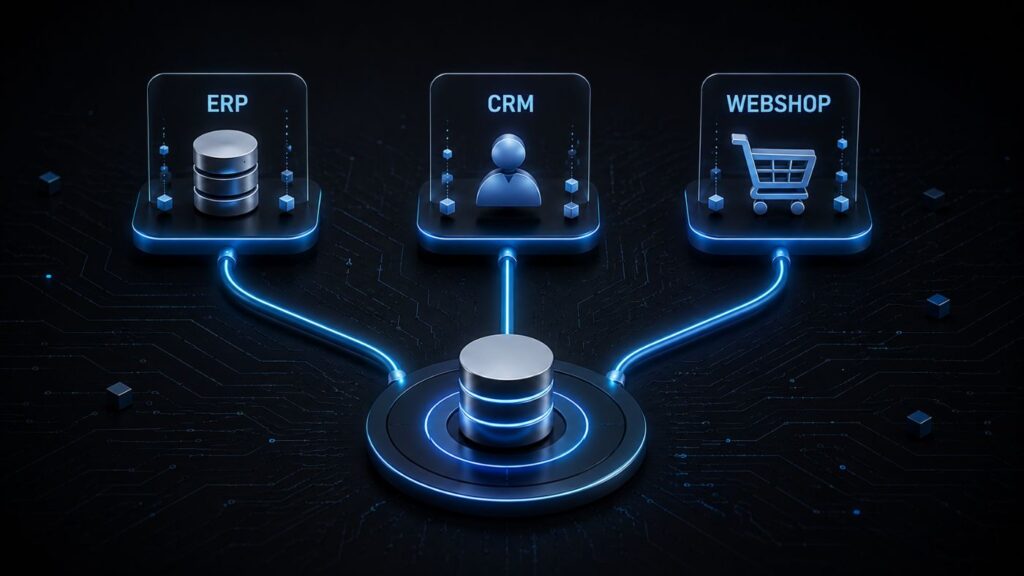
The data sits in a dozen systems, the report is built in Excel, several Excel versions of the plan are circulating, and costs are allocated with allocation keys nobody trusts. We bring the data together in one place, and every KPI gets one definition and one owner. Executive reports, plan-versus-actual comparison and activity-based cost allocation are built on top of this. You can also ask about the numbers in plain sentences, and for each one you can see where it comes from.

A data foundation with the first reports in 2-3 months · expandable module by module · does not replace your ERP

Does this sound familiar?

When someone asks about a number, and the answer is in somebody's spreadsheet

This is what we hear from finance, controlling and data leaders.

Before signing

There is a system, yet you do not trust the number

“Before I sign, I have everything checked again.”

CFO, large enterprise

Who is responsible

Nobody knows where the number comes from, and it has no owner

“I want to know where a number comes from and who is responsible for it.”

Head of controlling, large enterprise

The region asks

A discrepancy can only be explained the next day

“When the region asks about a discrepancy, I shouldn’t need until the next day to answer.”

CFO, large enterprise

On the CFO's desk

Everyone quotes a different number

“Not one more wrong number should go out through the CFO.”

Head of controlling, large enterprise

When someone is on holiday

The critical spreadsheets depend on one or two people

“The critical spreadsheets shouldn’t live in the heads of one or two people.”

Head of controlling, large enterprise

The foundation you build on

Parallel data stores are being built next to the data platform

“A second data warehouse shouldn’t be built next to my platform.”

Head of data, large enterprise

Not sure yet whether this is what you need?

Our expert will tell you whether it fits your situation.

What is at stake

If a number has no owner, the auditor will ask about it sooner or later

As long as the same question has several numbers, and the close depends on undocumented manual steps, every discrepancy turns into explaining. If the auditor or internal audit objects that the source of the numbers cannot be traced, or that internal controls are lacking, it is the finance leader who has to answer for it.

2nd and 3rd

place among CFOs’ priorities go to AI and automation, and to standardising processes.

Source: Gartner CFO community (Evanta), 2026

How it works

Order in the KPIs first, the chart after

01

We bring the data together in one place

We build a data warehouse and data marts, and load the data from the source systems into them automatically.

02

Every KPI has one definition and one owner

We define the first 10-15 executive KPIs together with your colleagues, and each one gets a named owner.

03

It grows module by module

Reporting, planning or cost allocation can be built on the Data Foundation in any order.

04

You can ask the AI too, but it does not make up numbers

It answers only from the defined KPIs. What it cannot see, it gives no number for.

Data warehouse, BI, planning, cost allocation

Four modules from one source: from data to controlling

A BI report can only be trusted if the data behind it is in order. We always start with the Data Foundation, and the other modules can be built on it in any order. If you already use Power BI or another reporting tool, we can build the reports in it.

Always first

Data Foundation

Data warehouse, data marts, data preparation, data owners and a KPI dictionary.

Module

Reporting and controlling

Executive reports, a dashboard, variance alerts and an AI assistant.

Module

Planning and forecasting

Budgeting, plan-versus-actual comparison, rolling forecasts.

Module

Activity-based cost allocation

Product, customer and site profitability based on actual activities.

What you get

Everyone sees the same number, and knows where it comes from

You can answer a discrepancy in the meeting, not the next day.

  • 01A trusted data warehouse built from the source systems’ data
  • 02KPI dictionary: every KPI with one definition and one owner
  • 03Executive and controlling reports that update automatically
  • 04An AI assistant you can ask about the defined KPIs in writing or by voice
  • 05Planning and plan-versus-actual comparison instead of many Excel versions
  • 06An activity-based cost model and profitability reports
Before you decide

Worth knowing

Who it is for: CFOs and finance directors, heads of controlling, heads of data and managing directors at mid-sized and large companies with several source systems, sites or product lines.

What we need from you

Access to the source systems, the support of the finance leader, and KPI owners who can make time for the work.

Rollout

The Data Foundation with the first reports takes 2-3 months. We introduce planning over one planning cycle, 3-4 months, and cost allocation in a pilot area in 2-3 months. The price depends on the modules you choose.

What it builds on

Data warehouses and data marts, automated data preparation, reports and dashboards, and data owners, decision rights and a KPI dictionary, so it is clear who is responsible for the data. All of this is done by our own data warehouse and BI team.

What it does not solve

It does not replace bookkeeping, IFRS consolidation or the audit, and it does not replace your ERP.

The Data Warehouse and Executive Reports product sheet

What we did not cover on this page: the steps from a small first step to the complete solution, why it pays to go this way, and how we work along the way. Feel free to forward it to your colleagues.

Not sure whether data is the place to start?

In 2-4 weeks, the Situation Assessment shows where most time goes on manual work and how many hours a week that adds up to. It costs HUF 199,000 + VAT, which we deduct from the price of your first development. If we do not find at least 20 hours a week of replaceable manual work, we refund the fee.

Frequently asked questions

What finance and data leaders usually ask

The Data Foundation, together with the first executive reports, takes 2-3 months. In that time the first 10-15 executive KPIs get their definitions and owners.

The AI answers only from the defined KPIs and shows the source. What it cannot see, it gives no number for.

No. The ERP and the other source systems stay; we collect the data from them. The data warehouse does not replace bookkeeping, IFRS consolidation or the audit either.

No, they can be ordered module by module. We always start with the Data Foundation; after that, reporting, planning and cost allocation can follow in any order.

For each module, the price consists of a one-off implementation fee and a monthly operating fee, so it depends on which modules you choose. We give you an exact quote after the Situation Assessment or a conversation with one of our experts.

Also worth a look

Further reading

Everyone should see the same number

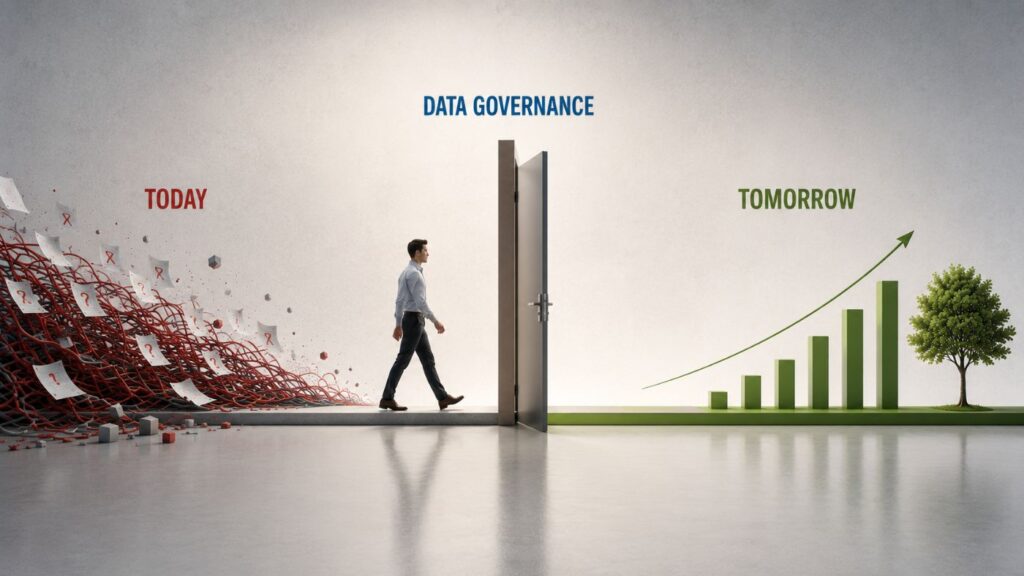
How every KPI gets a single definition, and what data governance brings the company

Marketing KPI Definitions
Expert blog
Marketing KPI Definitions
Inconsistent KPI definitions lead to misleading decisions. Learn why standardized marketing metrics are essential for reliable performance measurement.
The Benefits of Data Governance
Expert blog
The Benefits of Data Governance
Effective data governance creates business value. Discover how better data management can reduce costs and improve decisions.
Which Customer Record Is the Real One
Expert blog
Which Customer Record Is the Real One
Conflicting customer data undermines decisions. Explore why establishing a trusted customer record matters for business operations.
Just looking around?

Read about data and executive numbers on the blog, or subscribe to the Signal over Hype newsletter.

Data · Data Warehouse and Executive Reports

Interested in a data warehouse and executive reports? Let's talk.

Describe the situation in a sentence or two, and an expert in the field will get in touch with you.

Or call: +36 30 235 0100