AI and Humans Together
How to Transform the Organization
- AI In Business
AIisn’t here to steal jobs — it is here to take the boring stuff off your plate.
According to the Edelman Trust Barometer, more people are worried that machines will replace their jobs through automation. Here at Omnit, we believe the outlook is more optimistic.
AI is a powerful tool that handles repetitive, rule-heavy tasks that drain your time and mental energy, enabling teams to focus more on creative thinking, informed decisions, and what truly matters to customers. The potential of AI to reduce mundane tasks should bring a sense of relief and optimism to people.
Let’s explore the potential of AI for your company through this article.
What You Will Learn
If You’re Reading This Article, You’ll Learn:
- Why AI works best as a partner to humans, not a replacement for them
- Which tasks AI excels at—and where human judgment remains essential
- How combining human expertise with AI leads to better decisions and outcomes
- Why “human-in-the-loop” systems are critical for trust, accountability, and quality
- How organizations can design workflows where AI supports people, instead of sidelining them
- What happens when companies treat AI as an assistant rather than an autonomous decision-maker
- How collaboration between humans and AI reduces risk while increasing efficiency
By the end of the article, you’ll understand how AI can amplify human strengths instead of competing with them—and why that balance is key to sustainable success.
The goal isn’t to convince you that AI will replace everyone. And it’s definitely not to pretend humans are the problem that technology needs to fix.
The goal is to show how AI and humans are strongest together—with AI handling speed, scale, and repetition, and humans providing context, responsibility, and judgment.
Think of this article as a collaboration guide, not a takeover plan: enough insight to help you design AI systems that support people, improve work, and still keep humans firmly in charge.
AI Doesn’t Replace People — It Provides Space for Them to Grow
The true power of AI is taking the “robotic” grind off workers’ shoulders. Just consider all the mind-numbing, rule-following tasks that pile up in any business: sorting invoices, organizing documents, answering the same customer questions repeatedly. AI can handle those faster, cheaper, and without causing burnout.
But all this doesn’t mean the work disappears. It just shifts. This change in work dynamics, driven by AI, should make the audience feel prepared and adaptable to the evolving landscape.
- AI managesrepetitive, data-driven, logic-based tasks.
- Peoplelean into creativity, judgment calls, real problem-solving, and genuinely connecting with customers.
For leaders, the essential mindset shift is this: don’t bring in AI to replace your team — use it to unlock their potential. The real magic happens when you give people more time and space to focus on work that requires a human heart, brains, and imagination.

What This Looks Like Day-to-Day
AI–human teamwork isn’t a distant concept; most of our clients are already integrating it into their work processes. It’s transforming how people collaborate across departments. Here’s how it looks in real life:
- Customer Service:Chatbots now handle the influx of basic questions, resolving common issues quickly. Human agents only step in when the situation becomes complex — for example, when someone’s upset or when empathy, nuance, or a personal touch is needed.
- Marketing:AI tools can quickly create content drafts or test multiple campaign versions to improve effectiveness. Still, it’s the marketers who guide the big picture — setting the strategy, shaping the voice, and making sure it all connects.
- Finance:AI can scan invoices and automatically flag unusual transactions. That frees up finance teams to explore further — identifying trends, assessing risks, and helping the business grow with better insights.
This kind of teamwork doesn’t just make things faster and more efficient — it actually improves how work feels. People do less of the soul-draining tasks and more of what truly matters: the creative, thoughtful, high-impact work.
Training People — and Shifting the Mindset
Simply adding AI tools to a company won’t automatically create change. The real transformation happens when people learn how to use them — and, perhaps more importantly, when they stop viewing AI as the enemy and start seeing it as a helpful resource.
There are two big pieces to this:
- Basic AI knowledge:It’s essential that everyone — not just the tech crowd — needs to have a general understanding of what AI is and what it can (and can’t) do. Otherwise, rumors and fear spread much faster than real understanding.
- Hands-on, real-world training:From our experience, we know that explaining the theory isn’t enough. Teams must practice using these tools in their actual roles. For example, customer support staff should know how to switch to a chatbot, and finance teams should feel confident working with AI tools that scan transactions or process invoices.
However, the most important change is cultural. Once people stop worrying that AI is taking their jobs — and instead see it as just another tool to make work easier — they get on board. And when that happens, adoption doesn’t just happen; it lasts.
What Middle-level Leaders Can Do
AI–human teamwork doesn’t happen by itself. It requires genuine leadership — visible, involved, and a bit vulnerable. If you want this change to last, here’s what truly makes a difference.
Be Open and Clear
Don’t let people fill in the blanks with worst-case fears. Say it out loud: AI is here to help, not replace. Honesty and transparency go a long way in calming nerves and building trust.
Use the Tools Yourself
Seriously — don’t just talk about AI from the sidelines. Try it. Show your team you’re in the same boat, learning and figuring it out, too. That kind of example speaks louder than any training session.
Create Space for Experimentation
Allow people to tinker. Let them break things, try new tools, and test ideas. That’s where real progress happens — through trial and error.
Celebrate the Wins
When someone figures out how to save time or improve a process using AI, be sure to highlight their achievement. Recognition makes people feel safe trying new things, and it helps build momentum quickly.
Bottom line? This isn’t just a tech rollout. It’s a leadership moment. If you show up with curiosity, openness, and trust, your team will meet you there — and likely surprise you with what they can achieve. This reminder of leadership’s role in AI adoption should inspire and require accountability from the audience.
What to Watch Out For
People Start to Get Anxious or Assume the Worst
Keep the conversation open. Don’t let silence fuel rumors. Talk honestly about what AI can actually do (and what it can’t). And make space for questions — even the uncomfortable ones. This will reassure them and foster a transparent and ethical environment in your company.
Employees Feeling Like They’re Being Left Behind
Choose an “AI go-to” person. Someone from the team — not just IT — who understands the tools and can help others learn without making them feel dumb. That kind of peer support makes the shift much less intimidating.
Too Much Change Too Quickly
Take it slow. Begin with one tool, one team, one goal. Allow people to achieve a win first. Offer support and guidance to teams and personnel using AI. That early success fosters trust and sustains momentum without overwhelming anyone.
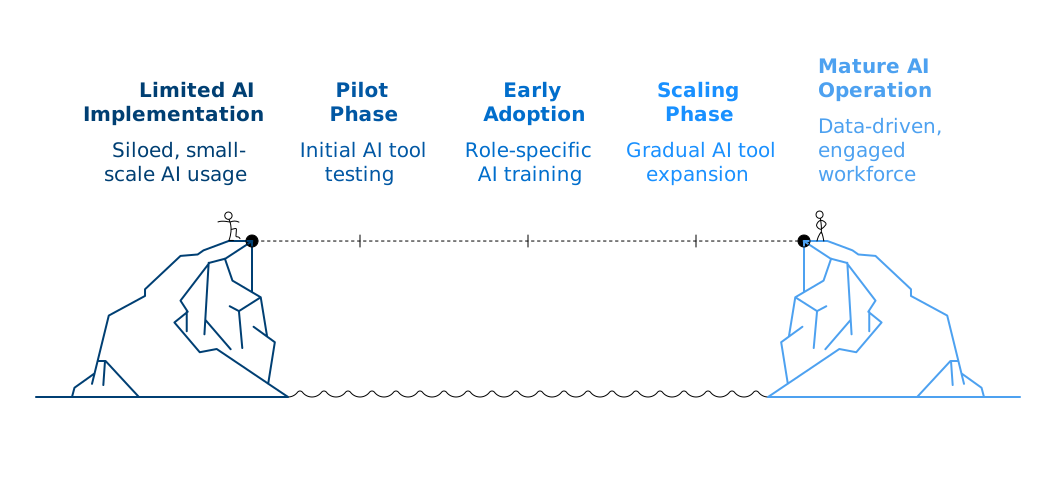
At Omnit, we also suggest developing a long-term plan for AI adoption.
Leading AI organizations rely on extended planning to make the adoption of AI smoother and less challenging. For example, OpenAI’s project to create the National Academy of AI instruction, in collaboration with 400,000 teachers, is based on a multi-year, gradual strategy to ensure strong support, instead of being overwhelmed by rapid, top-down changes.
What All Of This Leads to Is Simple
If you handle these early bumps carefully, they can turn into strengths: clearer communication, stronger peer networks, and a steady rollout that people can truly support. That’s the kind of foundation AI adoption needs.
Adopting AI Isn’t Just About Technology — It’s About Culture
Implementing AI in a company isn’t just about new tools or advanced software. It’s about people — how they think, how they learn, and how they collaborate.
When you involve employees in the process — instead of simply handing them tools from the top down — AI no longer feels like a threat. It becomes something empowering. It removes the tedious, repetitive tasks from their workload and allows them to focus on being more creative, strategic, and human.
The playbook is simple: include your people, train them, communicate honestly, and celebrate even the smallest wins. That’s how AI shifts from just a process upgrade to something that genuinely strengthens your culture.
So what’s next? Launch a training program and begin developing an internal AI strategy that clearly demonstrates how these tools can assist your team in their daily work.
Key Takeaways for Decision-Makers
- AI isn’t here to replace people — it’s here to support them. It handles the repetitive, data-heavy stuff so teams can finally focus on what really matters: creativity, big-picture thinking, and connecting with customers in a real way.
- The shift in AI adoption and use is bigger than just a technological phenomenon — it’s a cultural one. AI adoption only works when people want to use it. That means making it feel helpful, not like a threat to their role.
- Leaders set the tone. Always. When leaders are transparent, actually use the tools themselves, and take time to celebrate even small progress, it builds trust and helps the whole team move forward.
- Don’t try to do everything at once. Start with one tool, one team, and one clear goal. That way, people don’t feel overwhelmed — and you can build momentum steadily.
- Training matters — and it has to be practical. The more hands-on and role-specific the training, the easier it is for people actually to use AI in their day-to-day work.
- Adopting AI is a leadership moment. It takes curiosity, a bit of courage, and a whole lot of empathy to guide people through change — but if you lean in, it’s absolutely worth it.
A Final Word
AI isn’t here to take over — it’s here to free people up. At Omnit, we ensure that the AI solutions we provide are delivered with care, proper training, and trust. It doesn’t just speed things up; it makes your entire company feel more human, more creative, more connected, and better prepared for what’s ahead.
Curious about what that might look like for your company? Let’s talk. We’ll work with you to develop an innovative, people-first AI strategy tailored to your organization or team — and designed to help them achieve their goals.

Csaba Fekszi
Csaba Fekszi is an IT expert with more than two decades of experience in data engineering, system architecture, and AI-driven process optimization. His work focuses on designing scalable solutions that deliver measurable business value.
Related posts